
Appetizers
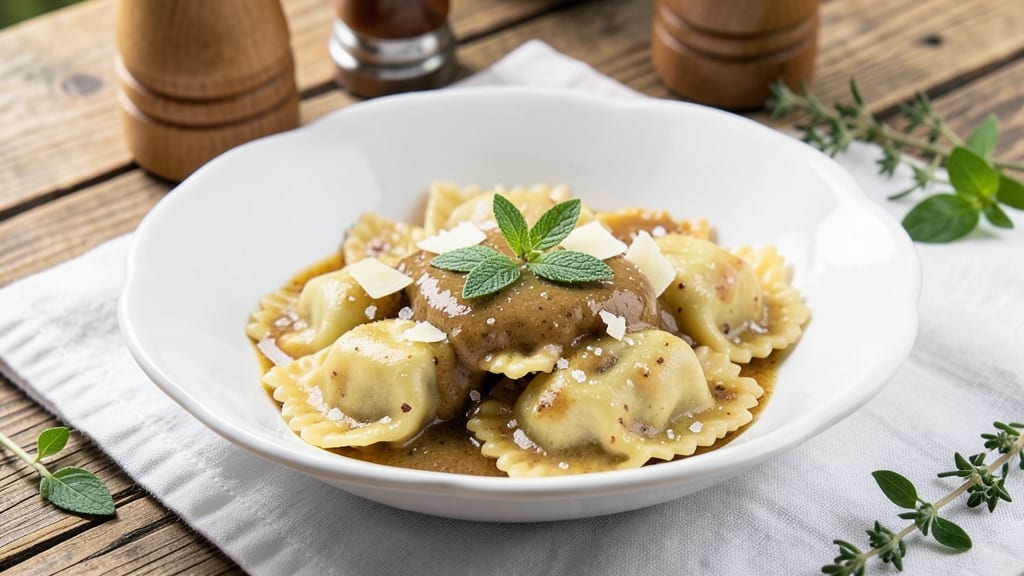
This authentic Italian cheese ravioli recipe delivers the real deal—tender handmade pasta enveloping a rich, creamy ricotta and Parmesan filling that bursts with every bite.
The secret lies in balancing traditional techniques with simple steps: fresh egg dough rolled paper-thin, a perfectly seasoned cheese mixture, and precise folding to create those iconic half-moon shapes. After years of perfecting this dish in Italian kitchens, I’ve simplified it for home cooks without sacrificing authenticity.
The dough starts with just four ingredients—flour, eggs, salt, and olive oil—mixed to a smooth, elastic consistency that rolls out effortlessly. For the filling, we combine ricotta with freshly grated Parmesan, nutmeg, and a touch of lemon zest to brighten the richness.
The key is working quickly after rolling the dough to prevent drying, then folding the filling into delicate squares before sealing with a fork. This method ensures ravioli that hold their shape beautifully during boiling.
What makes these ravioli truly special is the contrast of textures and flavors: the delicate, slightly chewy pasta encasing a velvety cheese center that melts into a creamy pool when cooked al dente.
Served with a simple brown butter sage sauce or a classic sage and walnut garnish, each bite transports you to a rustic Italian trattoria. The aroma alone—warm pasta, melting cheese, and fragrant herbs—will have everyone at your table asking for seconds.
Perfect for special occasions or weekend cooking projects, this recipe yields about 30 ravioli, enough to feed four with generous portions. The process may seem detailed, but breaking it into manageable steps makes it entirely approachable.
Once you master this technique, you’ll never buy store-bought ravioli again. Let’s get started on creating your own handmade masterpiece.
Ingredients for authentic italian cheese ravioli
Four dough ingredients plus rich cheese filling and aromatic herbs—everything you need for restaurant-quality ravioli at home.
| Ingredient | Amount | Notes |
|---|---|---|
| All-Purpose Flour 🌾 | 2 ½ cups | Sifted for smooth dough |
| Large Eggs 🥚 | 3 whole | Room temperature for best mixing |
| Extra-Virgin Olive Oil 🫒 | ¼ cup | Light, fruity variety preferred |
| Fine Sea Salt 🧂 | ½ tsp | Diamond Crystal preferred |
| Part-Skim Ricotta Cheese 🧀 | 1 cup | Drained overnight for best texture |
| Parmesan Cheese 🧀 | ¾ cup | Freshly grated from block |
| Freshly Grated Nutmeg 🌿 | ¼ tsp | Freshly grated for best flavor |
| Lemon Zest 🍋 | 1 tbsp | From organic lemon preferred |
| Fresh Sage Leaves 🌿 | ¼ cup | Chopped for sauce garnish |
| Unsalted Butter 🧈 | ½ cup | Cold for brown butter sauce |
| Semolina Flour 🌾 | ½ cup | For dusting ravioli |
The flour matters here—King Arthur or Caputo Tipo 00 if you want to splurge, but all-purpose works fine for beginners. Eggs should be at room temperature (pop them out of the fridge 30 minutes before mixing). For the ricotta, whole-milk, part-skim gives the best texture—none of that watery stuff. I always buy a wedge of Parmesan from the deli counter and grate it myself—pre-grated tastes like sawdust. Fresh nutmeg is a game-changer, but if you only have ground, toast it lightly in a dry pan first to wake up the flavor. Lemon zest adds brightness, so grab an organic lemon if possible—the thicker the peel, the more flavor.
No ricotta? Cottage cheese blended smooth works in a pinch, though it won't be as creamy. Short on Parmesan? Pecorino Romano has a sharper bite that pairs beautifully. The sage leaves can be dried if you're in a bind, but use half the amount—fresh is ideal for that aromatic punch. For the butter, European-style unsalted browns better than American brands. If you're making this ahead, prepare the filling first and store it wrapped in plastic—it keeps for 2 days in the fridge. The dough can be made a day ahead too, wrapped tightly in plastic and chilled.
Dough keeps best wrapped in plastic for 2 days in the fridge, or 3 months frozen between parchment paper. The filling? Use within 2 days for peak texture. For the brown butter sauce, make it fresh—it only takes 5 minutes—and keep it warm in a low oven while you cook the ravioli. These freeze beautifully too: boil, shock in ice water, then freeze on a tray before transferring to bags. They'll last 3 months this way, ready for quick meals.
Why You'll Love This Recipe
- Same recipe, different vibes: toss with butter and sage for a quick weeknight meal, or add a brown butter sage sauce for guests. Honestly, it’s my go-to when I don’t want to overthink dinner.
- No-Fuss Dough: I swear by this ricotta-egg dough—just flour, eggs, and a pinch of salt. No kneading, no waiting, and the texture? Silky smooth every time. (Yes, even when I forget to rest it.)
- Cheese Overload: That creamy ricotta filling with eggs and olive oil? It’s the kind of flavor that makes you close your eyes mid-bite. Simple, but ridiculously satisfying—no fancy ingredients, just pure comfort.
- Weeknight to Dinner Party: Same recipe, different vibes: toss with butter and sage for a quick weeknight meal, or add a brown butter sage sauce for guests. Honestly, it’s my go-to when I don’t want to overthink dinner.
Step-by-step instructions for authentic Italian cheese ravioli
Let's make these classic Italian ravioli with tender pasta and rich, flavorful filling.
Prepare the Dough
Create a mound of the 2.5 cups all-purpose flour on a clean work surface. Make a well in the center and add the 3 whole large eggs and 0.25 cup extra-virgin olive oil. The ingredients should form a shaggy mass at first—that's normal. Using a fork, gently mix the ingredients from the center outward until a rough dough begins to form.
Once the dough starts coming together, knead it by hand for about 5-7 minutes until smooth and elastic. If the dough feels too sticky, add a little more flour—just enough to make it workable. Wrap the dough tightly in plastic wrap and let it rest at room temperature for 30 minutes. This resting period relaxes the gluten, making it easier to roll out later.
Make the Filling
In a medium bowl, combine the 1 cup part-skim ricotta cheese, 0.75 cup parmesan cheese, 0.25 tsp freshly grated nutmeg, 1 tbsp lemon zest, and 0.5 tsp fine sea salt. Mix gently with a fork until just combined—don't overwork it. The ricotta should be smooth but still slightly lumpy, which is perfect for handmade ravioli.
Fold in the 0.25 cup chopped fresh sage leaves by hand, using a rubber spatula to gently incorporate them. Set the filling aside while you prepare the pasta dough. The filling should be cool but not cold—this ensures the ravioli cook evenly and the cheese doesn't melt prematurely.
Roll and Cut the Pasta
Divide the rested dough into 4 equal portions. Working with one portion at a time, roll it out on a floured surface using a rolling pin until it's very thin—about 1/16 inch thick. If the dough sticks, dust it lightly with flour. Roll the dough into a rectangle about 8x10 inches.
Using a 3-inch round cutter (or a glass of that size), cut circles from the rolled dough. Place 1 teaspoon of filling in the center of each circle, then fold the dough over to create a half-moon shape. Press the edges firmly with your fingers or a fork to seal tightly. Repeat with the remaining dough and filling.
Cook the Ravioli
Bring a large pot of water to a rolling boil and add 1 tablespoon salt. Gently drop the ravioli into the water, stirring lightly to prevent sticking. Cook for 3-4 minutes until they float to the surface and are tender but still slightly firm to the bite. They'll continue cooking slightly as they rest.
Use a slotted spoon to transfer the ravioli to a plate. Toss them gently with 2 tablespoons of the cooking water to prevent sticking. For the sauce, melt the 0.5 cup unsalted butter in a skillet over medium heat until it turns a golden brown color. Add the 0.5 cup semolina flour and stir for 1-2 minutes until the sauce thickens into a light roux.
Assemble and Serve
Pour the cooked ravioli into the skillet with the sauce, tossing gently to coat them evenly. The butter sauce should cling to the ravioli, creating a rich, velvety finish. Garnish with additional chopped fresh sage leaves and extra freshly grated parmesan cheese before serving.
Serve immediately while the ravioli are still warm and the sauce is glossy. Each bite should deliver a perfect balance of tender pasta, creamy ricotta filling, and nutty parmesan—just like Nonna used to make. Enjoy with a crisp green salad or a simple arugula dish to complement the richness.
Pro Tips For Making Authentic Italian Cheese Ravioli
- Strain That Ricotta: Drain your ricotta in a fine-mesh sieve for at least 30 minutes before mixing—it’s the only way to get rid of that excess whey that makes your filling watery. I learned this the hard way when my ravioli turned into sad, soggy blobs instead of pillowy clouds.
- Work the Dough Fast: Knead the dough for exactly 8–10 minutes by hand (or 5–6 minutes in a stand mixer) until it’s smooth but not sticky—overworking it makes the pasta tough. Stop when it pulls away cleanly from the bowl, even if it looks a little uneven.
- Roll Thin, Not Perfect: Use a pasta machine set to the thinnest setting (usually #6 or #7), but don’t obsess over uniformity—slightly uneven edges seal better. If the dough tears, patch it with a bit of flour and keep going; no one’s judging your ravioli for being almost flawless.
- Boil in Batches: Drop ravioli into generously salted boiling water one handful at a time—crowding lowers the temp and steams instead of cooks them. Stir gently once, then let them float freely; they’re done when they rise to the surface, usually 2–3 minutes.
Creative variations of this recipe
Classic Brown Butter Sage
This traditional sauce transforms simple butter into a fragrant, nutty masterpiece that clings beautifully to ravioli. Melt ½ cup unsalted butter in a skillet over medium heat until it turns a rich golden brown—watch closely to avoid burning.
Immediately add ½ cup semolina flour and stir for 1-2 minutes until it forms a light roux. Toss the cooked ravioli in this sauce, adding 2 tbsp pasta water to create a velvety consistency. Finish with 1 tbsp chopped fresh sage and a sprinkle of Parmesan. 🌿
Creamy Lemon Ricotta Sauce
For a lighter alternative, blend ½ cup ricotta cheese, 2 tbsp heavy cream, 1 tbsp lemon juice, 1 tbsp butter, and ¼ tsp nutmeg until smooth. Heat the mixture in a saucepan over low heat until warm, then toss with the cooked ravioli.
Garnish with extra lemon zest and cracked black pepper. This sauce highlights the filling's flavors while keeping the dish elegant. 🍋
Truffle Oil Finish
Elevate your ravioli with a luxurious touch by drizzling ½ teaspoon high-quality truffle oil over the finished dish. Start with 1 teaspoon of the brown butter sage sauce, then add the ravioli and toss gently.
Finish with a few drops of truffle oil and a sprinkle of freshly grated Parmesan. The earthy aroma of truffle oil complements the creamy filling perfectly, making this a showstopper for dinner guests. 💫
Spicy Arrabbiata Twist
For heat lovers, toss the cooked ravioli with a spicy tomato sauce made from ½ cup crushed San Marzano tomatoes, 1 clove garlic, ½ tsp red pepper flakes, and 1 tbsp olive oil.
Simmer for 5 minutes until thickened, then stir in 1 tbsp fresh basil. The acidity and heat cut through the richness of the cheese filling beautifully. 🌶️
Winter Squash Addition
Add seasonal depth by incorporating ½ cup roasted butternut squash purée into the cheese filling. Roast 1 cup cubed squash at 400°F for 20 minutes, then blend until smooth.
Mix this purée into the ricotta filling before assembling the ravioli. The natural sweetness of the squash balances the savory cheese, making this a perfect autumnal variation. 🎃
Herb-Infused Olive Oil
Create a vibrant, herbaceous drizzle by blending ¼ cup extra-virgin olive oil, 1 tbsp chopped fresh parsley, 1 tbsp chopped basil, 1 clove garlic, and a pinch of salt.
Drizzle this over the finished ravioli just before serving. The bright, fresh flavors contrast the richness of the cheese filling and add a pop of color to your plate. 🌿
Nutrition facts
Frequently asked questions
Can I substitute ricotta with another cheese for the filling?
Yes, but texture matters! For a similar result, use whole-milk cottage cheese (blended smooth) or mascarpone mixed with a little ricotta. Avoid low-fat versions—they can make the filling too watery. For a sharper flavor, swap 25% of the Parmesan with Pecorino Romano. Never use cream cheese, as it won't melt properly.
Why does my ravioli dough tear when rolling?
Overworking the dough or skipping the 30-minute rest makes it tough and prone to tearing. Keep your work surface well-floured and roll gently from the center outward. If the dough feels too dry, add a few drops of water; if too sticky, dust with more flour. Work with one portion at a time to prevent drying. Pro tip: Use a pasta machine for even thickness if rolling by hand feels challenging.
How do I prevent the cheese filling from leaking out?
Seal the edges tightly with a fork or your fingers, pressing firmly to create a strong bond. Use 1 teaspoon of filling per ravioli—too much causes leaks. Chill the assembled ravioli for 15 minutes before cooking to help them hold their shape. If filling leaks during boiling, your sauce will just be creamier!
Can I make ravioli ahead of time?
Assemble them and cook immediately, or freeze uncooked ravioli on a floured tray (don't stack). Once frozen solid, transfer to a bag for up to 3 months. To cook from frozen, drop them directly into boiling water—no need to thaw. For make-ahead meals, cook and freeze in an airtight container with sauce; reheat in a skillet with a splash of water.
What's the best way to reheat leftover ravioli?
For best texture, reheat in a skillet with a little butter or olive oil over medium-low heat, adding 2 tbsp pasta water to prevent drying. Avoid microwaving—it makes the pasta gummy. If reheating from frozen, cook in boiling water for 1-2 minutes extra than fresh. Always finish with fresh herbs or a drizzle of sauce to revive flavors.