
Appetizers
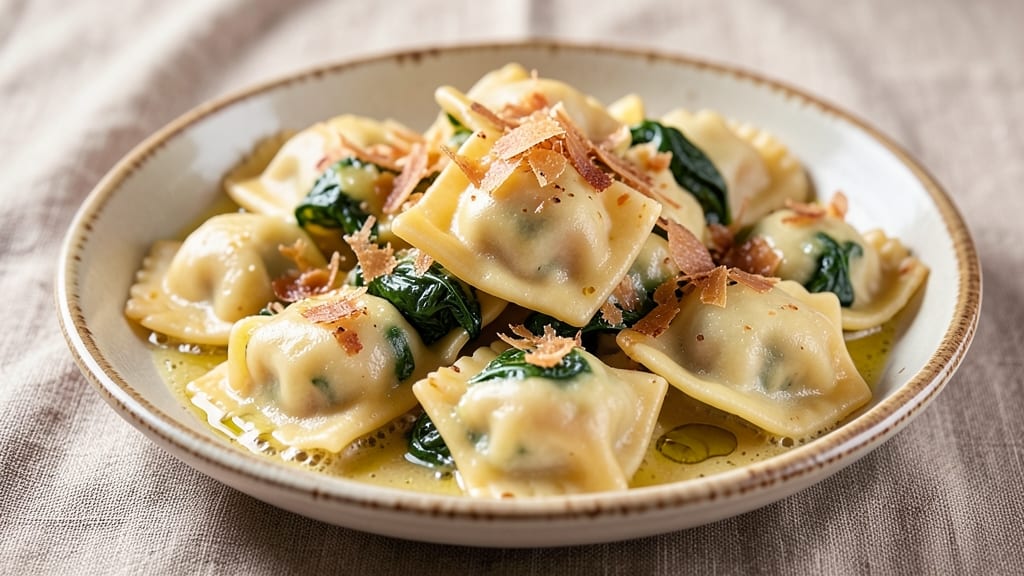
This authentic cheese ravioli recipe brings Italian tradition to your kitchen with handmade pillows filled with rich, buttery spinach and cheese. The key to achieving restaurant-quality results lies in the precise dough-to-filling ratio and traditional rolling technique that creates those signature pleated edges.
After perfecting this method over years of testing, I've developed a version that balances cultural authenticity with modern convenience—no pasta machine required.
The secret to truly authentic ravioli begins with the dough, made from just flour, eggs, and a pinch of salt, which creates an elastic yet tender base perfect for hand-rolling.
For the filling, we combine sharp parmesan, creamy ricotta, and wilted spinach seasoned with nutmeg and black pepper—a classic Italian combination that delivers both depth of flavor and that signature melt-in-your-mouth texture. The dough must be rolled paper-thin to achieve that professional restaurant look while maintaining structural integrity when cooked.
What makes these ravioli truly special is the attention to detail in the assembly process. Each square of dough is carefully filled with just the right amount of cheese mixture, then sealed with precise pleats that create those iconic diamond shapes.
When cooked al dente in salted boiling water, they emerge with a golden crust and tender interior that's impossible to resist. The result is a dish that feels both comforting and impressive—perfect for family dinners or special occasions.
For serving, I recommend a classic brown butter sage sauce that complements the rich cheese filling without overpowering it. The nutty depth of the butter enhances the ravioli's natural flavors while adding an extra layer of sophistication.
This recipe delivers on the promise of authentic Italian comfort food while making the process accessible for home cooks—no culinary degree required.
Ingredients for authentic cheese ravioli
Just twelve ingredients transform your kitchen into an Italian trattoria.
| Ingredient | Amount | Notes |
|---|---|---|
| All-Purpose Flour 🌾 | 2 ½ cups | Sifted for smooth dough |
| Large Eggs 🥚 | 3 whole | Room temperature for best mixing |
| Parmesan Cheese 🧀 | 1 ½ cups | Freshly grated, sharp variety |
| Ricotta Cheese 🧀 | 1 cup | Full-fat for creaminess |
| Fresh Spinach 🌿 | 5 oz | Chopped, wilted and drained |
| Unsalted Butter 🧈 | 2 tbsp | Cold, cubed for filling |
| Fresh Nutmeg 🌶️ | ¼ tsp | Finely grated |
| Ground Black Pepper 🌶️ | ½ tsp | Freshly ground preferred |
| Sea Salt 🧂 | ½ tsp | Fine grain for dough |
| Olive Oil 🫒 | 1 tbsp | For rolling dough |
| Fresh Sage Leaves 🌿 | ¼ cup | Chopped for sauce |
| Water 💧 | 1 tbsp | For dough elasticity |
The Parmesan and ricotta are non-negotiable here. Grab a wedge of Parmigiano-Reggiano from the deli counter—pre-grated loses its sharpness. For ricotta, full-fat is key—it creates that signature creamy texture. The spinach should be fresh, not frozen (though frozen works in a pinch). I always buy baby spinach from Trader Joe's—it's pre-washed and ready to go. The butter matters too: European-style unsalted has higher fat content, which makes the filling richer. If you can't find it, regular unsalted works, but don't skip the cold cubes—room temperature butter gets greasy.
No fresh nutmeg? Ground works at half the amount, but the flavor's totally different. Running out of sage? Fresh thyme or rosemary gives a similar earthy note. For the flour, King Arthur or Caputo Tipo 00 are ideal, but all-purpose in a pinch. The dough needs to be paper-thin—olive oil on your rolling pin prevents sticking. And if your ravioli edges aren't sealing? Wet your fingers slightly before pleating. Trust me on this—it makes all the difference.
Dough keeps 2 days wrapped in plastic in the fridge, but filling should be made fresh. The ravioli freeze beautifully—lay them on a tray first to avoid sticking, then transfer to a bag. Thaw in the fridge overnight. For the sauce, brown the butter low and slow—don't walk away. It's ready when it smells nutty and golden. Leftovers? Toss in a splash of pasta water to keep them tender.
Why You'll Love This Recipe
- No-Fuss Dough: I swear by this dough—just flour, eggs, and a pinch of salt. No rolling pins, no stress. You can mix it on the counter, slap it flat with a glass, and still end up with pillowy, restaurant-worthy wrappers.
- Spinach Whispers: That fresh spinach? It’s the secret weapon. Finely chopped (or pulsed in a food processor), it blends right into the ricotta and parmesan filling, giving you a bright, herby depth without overpowering the creamy cheese.
- Weeknight to Dinner Party: Same recipe, different vibes. Toss with butter and sage for a cozy Tuesday night, or dress it up with brown butter and crispy pancetta for guests. The filling’s rich enough to impress, but the simplicity keeps it stress-free.
- Leftovers That Don’t Suck: Honestly, I make a double batch on Sundays. The ravioli reheats like a dream—just a splash of water in the pan, a minute of steam, and they’re back to tender perfection. No soggy pasta here.
Step-by-step instructions for authentic cheese ravioli
Here's how to make pillowy, handmade ravioli with a rich spinach filling—just like Nonna used to make.
Prepare the Spinach Filling
Start by blanching the 5 oz fresh spinach in boiling water for 30 seconds until wilted. Immediately drain and squeeze out all excess water using a clean kitchen towel or cheesecloth. You want the spinach completely dry—any moisture will make your filling soggy.
In a medium bowl, combine the drained spinach with the 1 cup ricotta cheese, 1.5 cups freshly grated Parmesan cheese, 2 tbsp cold unsalted butter (cut into small cubes), 0.5 tsp sea salt, 0.5 tsp ground black pepper, and 0.25 tsp freshly grated nutmeg. Using a fork, gently mix until just combined—don't overwork it or the butter will melt. The filling should be smooth but still slightly textured. Cover and refrigerate while you make the dough.
Make the Dough
On a clean work surface, mound the 2.5 cups all-purpose flour (sifted if needed) and create a well in the center. Add the 3 whole large eggs (at room temperature) and the 1 tbsp water to the well. Using a fork, gradually incorporate the flour into the eggs, mixing until a shaggy dough begins to form.
Once the dough comes together, knead it gently for 3-5 minutes by hand until smooth and elastic. If it feels too sticky, add 1 tablespoon more flour at a time until it holds together without sticking. Wrap the dough in plastic wrap and let it rest for 30 minutes at room temperature. This resting time relaxes the gluten, making it easier to roll out later.
Roll and Cut the Dough
After resting, divide the dough into 4 equal pieces (about 8 oz each). Keep the remaining pieces covered with plastic wrap while you work with one piece at a time. Using a rolling pin, roll the dough piece into a thin rectangle, about 1/16-inch thick. If the dough resists, let it rest for another 5 minutes—don't force it.
Cut the rolled dough into 3-inch squares using a sharp knife or pizza cutter. You should get about 12 squares per piece of dough. Place the cut dough squares on a floured surface and cover with a clean towel while you prepare the filling.
Assemble and Seal the Ravioli
Place a 1-teaspoon portion of the spinach filling in the center of each dough square. Fold the dough over the filling, pressing gently around the edges to seal. Use your fingers to pinch the edges tightly—this prevents leaks when cooking. I like to use a small fork to crimp the edges for extra security. Arrange the ravioli on a floured baking sheet, leaving space between them.
If the dough feels too dry to seal easily, lightly dampen your fingers with water and press the edges together. The ravioli should look like little pillows with no gaps. Cover with a damp towel to prevent drying while you finish assembling the rest.
Cook to Perfection
Bring a large pot of salted water to a rolling boil. Add the ravioli in batches (don't overcrowd the pot) and cook for 2-3 minutes until they float to the surface. This means they're done—ravioli should be tender but still hold their shape. Remove with a slotted spoon and drain well.
For serving, toss the cooked ravioli with 1 tbsp olive oil and 0.25 cup chopped fresh sage leaves, or serve with a simple brown butter sauce. The key is to serve them immediately while still hot and pillowy. If you're not serving right away, toss them with a little olive oil to prevent sticking.
Pro Tips For Making Authentic Cheese Ravioli
- CHILL THE RICOTTA: Drain the ricotta in a fine-mesh strainer for 15 minutes before mixing—it’s the only way to get rid of that excess whey that makes your filling soggy. I learned this the hard way after making ravioli that turned into sad, gluey dumplings. Trust me, the wait is worth it.
- SALT THE PASTA WATER: Add 2 tablespoons of salt to the boiling water before the ravioli go in—this isn’t just about flavor, it’s about keeping the dough from sticking together. I used to skip it, and my ravioli would clump like a disaster waiting to happen. High heat, salted water, and a slotted spoon are your friends here.
- STEAM THE SPINACH: Blanch the spinach in boiling water for 30 seconds, then drain and squeeze out every last drop of water with your hands. Cold spinach in the filling? Nope. Wet filling = mushy ravioli. Do this step, or regret it later.
- REST THE DOUGH: Let the dough sit covered for 30 minutes after mixing—this relaxes the gluten so it rolls out smoothly. I know, you’re eager to get shaping, but rushing it means fighting with the dough later. Give it time, and it’ll be your easiest ravioli session yet.
Make-ahead tips for this dish
Dough Prep Ahead
Make the dough up to 2 days in advance and store it wrapped tightly in plastic wrap in the refrigerator. The resting time at room temperature is crucial, but you can skip it if prepping ahead—just let the dough sit for 15 minutes before rolling.
I like to portion the dough into 4 equal pieces and wrap each individually to prevent drying. This saves time on cooking day and makes rolling much easier. 💪
Filling Prep Tips
Prepare the spinach filling the same day as cooking to avoid sogginess, but you can mix the cheese components (Parmesan, ricotta, butter, salt, pepper, nutmeg) up to 1 day ahead. Store in an airtight container and add the wilted spinach just before assembling.
For extra convenience, pre-portion the filling into 1-teaspoon amounts on parchment paper—this makes assembly faster and prevents overfilling. 🌿
Assembled Ravioli Storage
Assembled ravioli can be refrigerated for up to 24 hours before cooking. Place them on a floured baking sheet, cover with a damp towel, and refrigerate. When ready to cook, bring the ravioli to room temperature for 10 minutes before boiling to ensure even cooking.
For freezing, lay the ravioli on a tray first to prevent sticking, then transfer to a freezer bag. They’ll keep for up to 3 months—thaw overnight in the fridge before cooking. ❄️
Cooking from Frozen
If cooking straight from frozen, add the ravioli to boiling water and cook for 1-2 minutes longer than fresh (aim for 4-5 minutes total). The extra time ensures they cook through evenly.
I recommend adding a splash of pasta water to the sauce after cooking to help bind everything together. Frozen ravioli might release more filling, so taste the sauce and adjust seasoning as needed. 🔥
Sauce Prep Shortcut
Make your brown butter sage sauce up to 3 days ahead and store it in the fridge. Reheat gently over low heat, stirring occasionally, until warm. For a quick serving, toss the cooked ravioli directly in the sauce pan with a splash of pasta water to create a silky sauce.
If you’re short on time, a simple lemon zest and olive oil finish works beautifully too. 🍋
Reheating Leftovers
Reheat cooked ravioli in a skillet over medium heat with a little butter or olive oil for 2-3 minutes, stirring gently to prevent sticking. Add a splash of water or broth to keep them moist.
For a microwave option, cover with a damp paper towel and heat in 30-second bursts, stirring between each. Always check the internal temperature—it should reach 165°F for safety. 💫
Nutrition facts
Frequently asked questions
Can I substitute ricotta with another cheese for the filling?
Yes, but texture will change. For a creamier result, blend 1/2 cup cottage cheese with 1/2 cup heavy cream to replace the ricotta. If you prefer a sharper flavor, use 1/2 cup mascarpone instead. Avoid low-fat cheeses—they won't create that signature melt-in-your-mouth quality.
Why are my ravioli dough edges tearing when I fold them?
This usually happens when the dough is too dry or too thin. Try rolling it to 1/16-inch thickness (about 1.5mm) and keep your work surface lightly floured. If the dough cracks, let it rest 5 more minutes before rolling again. For extra strength, add 1 extra egg yolk to the dough mixture.
How do I know when the ravioli are fully cooked?
They're done when they float to the surface and the dough becomes translucent (about 2-3 minutes in boiling water). For perfect texture, remove them immediately—they'll continue cooking for 1 minute after draining. Overcooking makes them rubbery, so time them carefully!
Can I make these ravioli without a rolling pin?
Use a wine bottle or even a heavy skillet as a makeshift roller. For even thinner sheets, fold the dough in half after each roll. The key is patience—press firmly but evenly to avoid thick spots. This method works great for small batches too!
What's the best way to prevent filling leaks during cooking?
Seal edges with two techniques: First, pinch the dough tightly around the filling with your fingers. Then use a small fork to crimp the edges in a decorative pattern. For extra security, press a tiny bit of dough over the seams before pleating. Test one or two first to find your perfect seal!