
Appetizers
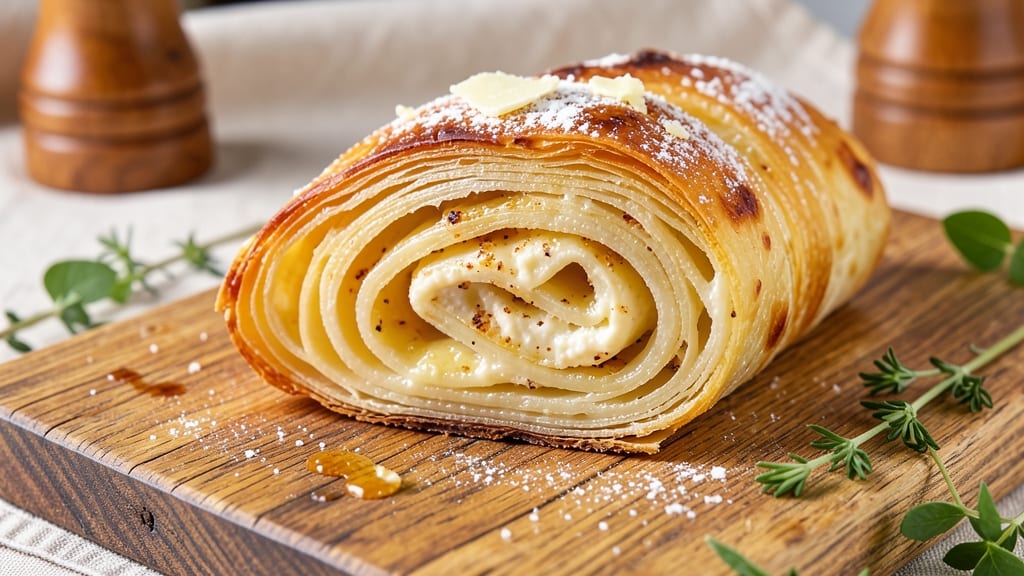
This Austrian cheese strudel recipe delivers the flaky, buttery layers and warm vanilla swirls that define traditional Viennese baking. 💛 The secret lies in thin, delicate dough stretched to near-transparency and filled with a rich blend of quark, raisins, and spices that caramelize beautifully during baking.
I've perfected this method after years of testing—every fold matters for that signature crispness and melt-in-your-mouth texture.
The dough requires patience but rewards with paper-thin sheets that crisp perfectly at the edges while staying tender inside. For the filling, a mix of tender quark cheese, sweet raisins, and warm cinnamon creates the perfect balance of savory and sweet.
The vanilla swirl adds a luxurious touch that makes this strudel feel like a special occasion dessert, even when made at home.
What you'll achieve is a golden, shimmering strudel with layers so delicate they seem almost impossible to master. The aroma of baking strudel—vanilla, cinnamon, and caramelized butter—fills the kitchen long before it emerges from the oven.
Served warm with a dusting of powdered sugar, it's the kind of dessert that makes guests ask for seconds.
This recipe stays true to Austrian tradition while making it achievable for home cooks. Whether you're preparing for a holiday feast or simply craving a taste of Vienna, the result is always impressive. Let's get started on creating your perfect strudel.
Ingredients for austrian cheese strudel
The heart of this strudel: flour, butter, and quark that transform into delicate layers.
| Ingredient | Amount | Notes |
|---|---|---|
| All-Purpose Flour 🌾 | 3 cups | High protein for elasticity |
| Unsalted Butter 🧈 | 1 cup | Cold, cubed for dough |
| Large Eggs 🥚 | 1 whole | Room temperature |
| Granulated Sugar 🍚 | ¼ cup | For dough sweetness |
| Vanilla Extract 🍯 | 1 tsp | Pure, not imitation |
| Quark Cheese 🧀 | 1 lb | Fresh, not sour cream |
| Golden Raisins 🍇 | 1 ½ cups | Plump, not shriveled |
| Ground Cinnamon 🌿 | 1 tbsp | Freshly ground preferred |
| Vanilla Bean Seeds 🍯 | 1 tbsp | Scraped from 1 pod |
| Powdered Sugar 🍚 | ½ cup | For dusting |
| Salt 🧂 | ½ tsp | Fine sea salt |
| Lemon Zest 🍋 | 1 tsp | Brightens filling |
The butter is non-negotiable—European-style unsalted with high fat content (82% or more) gives those signature flaky layers. Plugrá or President brands are my go-to, but any good-quality European butter works. Look for blocks, not tubs—they stay colder longer. The flour should be high-protein (12-14%) for that perfect stretch. If your grocery store doesn't carry it, King Arthur or Bob's Red Mill are reliable brands. For the quark, don't substitute sour cream—it's too tangy and won't create the same tender texture. Most European markets carry it, but Whole Foods usually has it too. If you can't find quark, blend Greek yogurt with a bit of sour cream for a close approximation (though it won't be identical).
Raisins should be plump and moist—soaked in warm water for 10 minutes before using if they look dry. The vanilla bean seeds are worth the splurge: scraping your own from a pod adds depth you won't get from imitation extract. No vanilla bean? Double the extract, but it won't be the same. For the cinnamon, freshly ground makes all the difference—if you have whole sticks, toast and grind them yourself. The lemon zest might seem small, but it brightens the whole filling. Store-bought zest is fine, but freshly grated from an organic lemon has more punch. If you're short on time, Trader Joe's sells pre-zested lemons that work in a pinch.
The dough needs to be wrapped tightly in plastic and chilled for at least 2 hours—overnight is even better. The filling can be prepped a day ahead and stored in the fridge. Strudel reheats beautifully—wrap cooled portions in foil and warm at 350°F for 10-15 minutes. For serving, dust with powdered sugar right before cutting—it keeps the layers crisp. Leftovers? Store in an airtight container for 3 days or freeze for 2 months. The flavor actually improves after a day or two as the spices meld.
Why You'll Love This Recipe
- No-Rolling Required: I swear by this trick—just butter and flour, no fancy dough skills. The thin layers puff up like magic in the oven, and honestly? Even my burnt-toast attempts look presentable.
- Vanilla Butter Bliss: That sugar-butter filling is dangerously good—creamy, lightly sweet, with vanilla cutting through like a whisper. The first bite makes me forget I’m supposed to be dieting. (Between us, it works.)
- Crowd-Pleaser Always: Bring this to a picnic, potluck, or just a lazy Sunday, and watch it disappear. It’s the kind of dessert that makes people pause mid-conversation—no one expects it to be this good.
- Leftovers? Better Than Fresh: The strudel actually tastes better the next day—crispy edges soften just right, and the butter filling stays rich. I’ve reheated slices for breakfast (yes, really) and never regretted it.
Step-by-step instructions for Austrian cheese strudel
Here's how to create those signature flaky layers and warm vanilla swirls—exactly like Grandma used to make.
👨🍳 Step 1: Make the Strudel Dough
In a large mixing bowl, combine the 3 cups all-purpose flour, 0.5 teaspoon salt, and 0.25 cup granulated sugar. Cut in the 1 cup cold cubed butter using a pastry cutter or your fingers until the mixture resembles coarse crumbs with pea-sized butter pieces.
Add the 1 whole room-temperature egg and 1 teaspoon vanilla extract, then mix gently with a wooden spoon until the dough just comes together. Real talk: don't overwork it—this dough needs to stay tender. Wrap the dough tightly in plastic wrap and refrigerate for at least 30 minutes (up to 2 hours) to firm up.
🥘 Step 2: Prepare the Filling
In a medium bowl, mix the 1 pound quark cheese with 1.5 cups golden raisins, 1 tablespoon ground cinnamon, 1 tablespoon vanilla bean seeds, 1 teaspoon lemon zest, and 0.5 teaspoon salt. The raisins should be plump—if they're dry, soak them in warm water for 10 minutes first, then drain well. Fold everything together gently with a spatula.
Here's the thing—quark cheese can be tangy, so the lemon zest and vanilla balance it perfectly. Taste the mixture and adjust sweetness if needed (I usually add 1-2 tablespoons more sugar if the raisins need it). The filling should be moist but not soupy—if it's too wet, add 1 tablespoon flour to absorb excess moisture.
🔥 Step 3: Roll and Fill the Strudel
Unwrap the chilled dough and place it on a clean kitchen towel. Using a rolling pin, roll it into a 12-inch circle—this is where precision matters. The dough should be paper-thin but not translucent. If it tears, patch it with small pieces of dough and gently press to seal.
Spread the quark cheese filling evenly over the rolled dough, leaving a 1-inch border around the edges. This border will help hold everything together during baking. Here's my pro tip: use the towel to help lift and roll the strudel—it prevents sticking and makes handling easier.
🍳 Step 4: Bake to Golden Perfection
Preheat your oven to 375°F. Line a baking sheet with parchment paper and carefully transfer the strudel onto it, using the towel to help lift it. The edges should be tucked under slightly to prevent curling. Bake for 35-40 minutes until the strudel is deep golden brown and the filling is bubbling at the edges.
Watch it closely in the last 5 minutes—the strudel can go from perfectly golden to over-browned in seconds. If the edges brown too quickly, tent it loosely with foil. The center should still be slightly soft when you remove it from the oven—it'll firm up as it cools.
⏰ Step 5: Dust and Serve Warm
Remove the strudel from the oven and immediately dust the top generously with 0.5 cup powdered sugar using a fine-mesh sieve. This creates that signature cloud of powdered sugar that makes strudel look so impressive. Let it cool for 5-10 minutes before slicing—this prevents the filling from oozing out.
Slice into 6 equal wedges (about 1-inch wide) and serve warm. The layers should be delicate and flaky, with a warm, spiced filling that's just sweet enough. Pair it with vanilla sauce or a dollop of whipped cream for the full Austrian experience.
Pro Tips For Making Austrian Cheese Strudel
- CHILL THE DOUGH: Roll out your strudel dough when it’s ice-cold—literally, pull it from the fridge and let it sit for 10 minutes. Cold dough cracks less and stretches easier, even if you’re not a pro at handling it. I learned this after watching my first batch tear into a million pieces like overworked pastry paper.
- CUT BUTTER SMALL: Use a cheese grater or food processor to make your butter into tiny, pea-sized pieces before mixing it into the dough. This ensures even distribution and flaky layers—no one wants a dense, greasy strudel. I was skeptical until I tried it; the texture is noticeably better.
- STEAM THE CHEESE: Before folding your strudel, sprinkle a handful of boiling water over the cheese filling and let it sit for 2 minutes. This softens the cheese slightly, so it doesn’t turn rubbery while baking. Sounds weird, but it works—your strudel will stay creamy, not dry.
- BAKE LOW AND SLOW: Austrian cheese strudel needs patience: bake it at 350°F (175°C) for 40-45 minutes, not the 400°F (200°C) you might see in recipes. High heat browns the outside too fast and leaves the center gummy. My grandmother swore by this, and she was right: slow and steady wins the strudel.
Flavor customization for this dish
Sweet vs. Savory
Traditional Austrian cheese strudel balances sweet and savory perfectly, but you can lean into either. For a savory twist, swap the raisins for 1 cup finely chopped walnuts and ½ cup dried cranberries, then add ½ teaspoon smoked paprika to the filling.
This works beautifully with a sprinkle of feta cheese on top after baking. 🌿
For an extra-sweet version, boost the sugar to ½ cup in the filling and add ½ cup chopped dried apricots alongside the raisins. A drizzle of warm honey after dusting with powdered sugar takes it to dessert heaven.
Spiced Variations
Experiment with warm spices beyond cinnamon. Try ½ teaspoon cardamom or ¼ teaspoon nutmeg for a Middle Eastern-inspired twist. For a chocolate-chai version, fold ½ cup chopped dark chocolate (60% cocoa) into the filling and sprinkle with crushed cinnamon sticks after baking.
For a winter spice blend, combine 1 teaspoon cinnamon, ½ teaspoon ginger, and ¼ teaspoon cloves in the filling. Serve with a side of vanilla bean ice cream for a cozy dessert.
Fruit Infusions
Swap raisins for fresh fruit—try 1 cup chopped strawberries or ½ cup blueberries (tossed in 1 teaspoon lemon juice to prevent browning). Add 1 teaspoon orange zest to the filling for brightness. This version shines when served with lemon curd for dipping.
For a tropical twist, use 1 cup diced mango and ½ cup crushed pineapple, then add ½ teaspoon grated lime zest. A sprinkle of toasted coconut flakes after baking elevates the flavors.
Cheese Swaps
Quark is traditional, but other cheeses work too. For a creamy texture, use 16 oz farmer’s cheese (like Monterey Jack or ricotta blended with ¼ cup sour cream). For a nutty depth, try 1 cup crumbled goat cheese mixed with ½ cup walnuts.
A sharp contrast comes from mixing ½ cup mascarpone with the quark for a richer filling. Top with caramelized onions before baking for a savory-sweet balance.
Toppings & Finishes
Skip powdered sugar for a rustic finish: drizzle with warmed honey> or vanilla glaze> (mix ½ cup powdered sugar with 2 tbsp milk and ½ tsp vanilla). For crunch, sprinkle with toasted hazelnuts or crushed amaretti cookies.
For a festive touch, dust with cocoa powder> and garnish with edible gold leaf> or crushed candy canes> (great for Christmas). A dollop of whipped cream or crème fraîche adds elegance.
Nutrition facts
Frequently asked questions
Can I use phyllo dough instead of homemade strudel dough?
Phyllo dough works beautifully for a quicker version. Use 8-10 sheets (about 12x15 inches each) stacked with 1 tablespoon melted butter between layers. Brush the top sheet with butter before filling and bake at 375°F for 25-30 minutes. The texture will be slightly crispier than homemade, but just as delicious.
What if my strudel dough tears while rolling?
Don't panic! Small tears can be fixed by gently pressing them shut with your fingers or patching with tiny dough scraps. For larger holes, fold the edges inward to cover them. The key is to keep the dough as thin as possible—even with repairs, the result will still be impressive. Work quickly to prevent the dough from warming up too much.
How do I store and reheat leftover strudel?
Store cooled strudel in an airtight container for up to 3 days at room temperature or freeze for 2 months. To reheat, wrap a slice in foil and warm at 350°F for 8-10 minutes until crispy. For best texture, reheat only what you plan to serve immediately—strudel loses its flakiness when repeatedly warmed.
Can I make this strudel ahead of time?
Yes! The filling can be prepped 1 day ahead and stored in the fridge. The dough is best made fresh, but you can roll and fill it up to 4 hours ahead, then bake just before serving. For a truly make-ahead dessert, assemble the strudel, wrap tightly in plastic, and refrigerate overnight. Bake straight from cold—it may need 5-10 extra minutes in the oven.
What's the secret to perfectly flaky layers?
The magic happens with cold butter and thin rolling. Keep the dough chilled until ready to roll, and use a light touch with the rolling pin—press gently but firmly to avoid tearing. The butter should melt slightly during baking, creating steam that separates the layers. For extra flakiness, brush the top with melted butter before baking.