
Appetizers
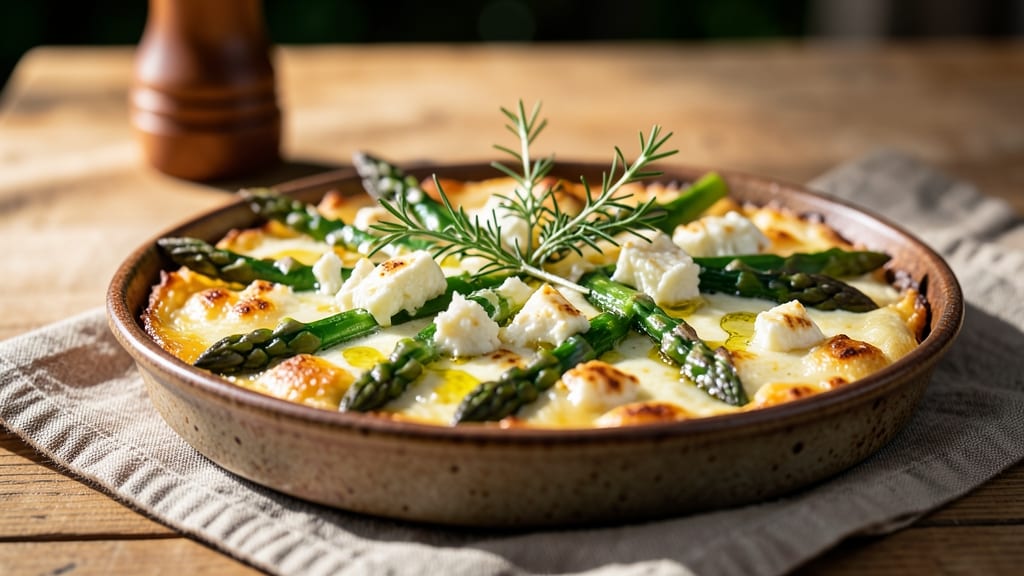
This asparagus and goat cheese frittata recipe delivers the perfect balance of crispy edges and creamy cheese swirls in every bite.
The secret lies in blanching asparagus first—just 2 minutes in boiling water preserves its vibrant green color and tender-crisp texture, while the eggs transform into a golden, fluffy canvas for the rich goat cheese.
I developed this recipe after realizing how often frittatas turned out either gummy or dry, and this method solves both problems with precision timing and gentle heat.
The magic happens in two stages: stovetop for initial cooking to set the base, then a finish in the oven to achieve those coveted crispy edges without drying out the center.
Goat cheese adds a tangy creaminess that pairs beautifully with the earthy asparagus, while a sprinkle of flaky salt on top elevates every bite.
What makes this recipe truly special is how it transforms simple ingredients into something restaurant-worthy with minimal effort—ideal for brunch, a light dinner, or an impressive appetizer.
By the time you're done, you'll have a frittata with perfectly set eggs that are creamy yet firm, crispy edges that offer satisfying texture contrast, and pockets of melted goat cheese throughout.
The asparagus maintains its bright green color and tender-crisp bite, while the overall dish has a rich, savory depth that makes it feel indulgent without being heavy. This is the kind of recipe that proves you don't need complicated techniques to create something impressive.
Whether you're feeding a crowd or treating yourself to a special breakfast, this frittata comes together in about 30 minutes with just 8 ingredients. The method is foolproof—no flipping required—and the results are consistently delicious. Let's get started on creating your perfect frittata.
Ingredients for asparagus and goat cheese frittata
Eight ingredients transform into a restaurant-worthy frittata with crispy edges and creamy goat cheese swirls.
| Ingredient | Amount | Notes |
|---|---|---|
| Large Eggs 🥚 | 8 whole | Room temperature for even cooking |
| Fresh Asparagus Spears 🌱 | 1 lb | Trimmed, blanched for 2 minutes |
| Goat Cheese 🧀 | 8 oz | Soft, crumbled, not spreadable |
| Heavy Whipping Cream 🥛 | ¼ cup | Full-fat for richness |
| Extra-Virgin Olive Oil 🫒 | ¼ cup | High-quality, fruity variety |
| Diamond Crystal Kosher Salt 🧂 | ¾ tsp | Fine grain preferred |
| Freshly Ground Black Pepper 🌶️ | ½ tsp | Coarsely ground |
| Garlic Cloves 🧄 | 3 cloves | Minced, for depth of flavor |
The asparagus and goat cheese are the stars here. Look for asparagus with tight tips and vibrant green color—avoid any with woody stems. Whole Foods or local farmers markets often carry the freshest spears. For goat cheese, La Tourangelle or Murrays Cheese brands deliver consistent quality; avoid pre-shredded varieties that often contain anti-caking agents. The eggs should be large and fresh within 1 week of the pack date—older eggs create rubbery frittatas. Preheat your oven to 375°F (190°C) before starting, as this two-stage cooking method relies on precise temperature control.
No goat cheese? Fresh ricotta or mascarpone work beautifully, though the tang will differ slightly. Substituting heavy cream for goat cheese requires reducing it by half first to maintain proper texture. The olive oil matters—California Extra Virgin brands like Corto or Filippo Berio provide the best flavor profile. For garlic, freshly minced is non-negotiable—jarred minced garlic lacks the aromatic depth. If you're short on time, pre-blanched asparagus from the grocery store frozen section works in a pinch, though fresh is superior. The kosher salt is critical for seasoning the eggs properly—Diamond Crystal measures differently than Morton, so use the recipe's specified amount precisely.
This frittata reheats beautifully—30 seconds in the microwave or 5 minutes at 350°F (175°C) restores crispiness. Store leftovers in an airtight container for up to 3 days in the refrigerator. For make-ahead convenience, prepare through the stovetop stage, then refrigerate the unbaked frittata for up to 24 hours before finishing in the oven. The asparagus will maintain its vibrant color when properly blanched and stored with a paper towel to absorb excess moisture. Freezing isn't recommended due to texture changes in the eggs, but you can freeze individual portions for 1 month if wrapped tightly in plastic wrap.
Why You'll Love This Recipe
- One-Pan Magic: I swear by this recipe when I’m too tired to wash dishes—just one skillet, a splash of olive oil, and you’re golden. The asparagus roasts right alongside the eggs, so no chopping, no fuss, just that satisfying sizzle of everything coming together.
- Creamy Crispy Balance: That first bite—crispy edges from the olive oil, gooey goat cheese pulling apart, and the asparagus still tender—is chef’s kiss. The heavy cream makes it rich but not heavy, and the goat cheese adds this tangy depth that keeps me coming back.
- Weeknight to Brunch: Honestly, this works for everything—a lazy Tuesday dinner, a weekend brunch with friends, or even packed for lunch. I’ve served it warm, cold, or at room temp, and it’s always a hit. (Yes, even on a Tuesday night.)
- Leftovers That Don’t Suck: Between us, most frittatas turn dry or rubbery when reheated. Not this one. The cream keeps it moist, and I’ve had it just as good the next day—sliced for sandwiches or reheated with a sprinkle of salt. Zero waste, maximum flavor.
Step-by-step instructions for asparagus and goat cheese frittata
A perfect balance of crispy edges and creamy goat cheese swirls awaits with this method.
Blanch and Prep the Asparagus
Trim the tough ends from the 1 lb fresh asparagus spears by snapping them at their natural break points. Cut the spears into 2-inch pieces for even cooking. Bring a pot of salted water to a boil and blanch the asparagus for exactly 2 minutes—this preserves their vibrant green color and tender-crisp texture. Immediately drain and plunge into ice water to stop the cooking process. Drain again and pat thoroughly dry with a kitchen towel.
The blanching step is crucial—it removes any bitterness from the asparagus while keeping them firm enough to hold their shape in the frittata. If you skip this, your asparagus will turn mushy and release excess liquid into the egg mixture. Once dry, transfer the asparagus to a bowl and toss with ½ teaspoon of the 0.75 tsp diamond crystal kosher salt and ¼ teaspoon of the 0.5 tsp freshly ground black pepper. Set aside.
Whisk Eggs and Build the Frittata Base
In a large mixing bowl, crack the 8 whole large eggs and whisk them vigorously until the yolks and whites are fully combined and the mixture is uniform in color. Add the 0.25 cup heavy whipping cream, 0.25 cup extra-virgin olive oil, remaining 0.25 tsp diamond crystal kosher salt, and remaining ¼ teaspoon freshly ground black pepper. Whisk again until everything is well incorporated—this ensures a silky texture and even distribution of flavor.
Preheat your oven to 375°F. Heat a 10-inch oven-safe skillet (cast iron works best) over medium heat and add 1 tablespoon of the extra-virgin olive oil. When the oil shimmers, add the 3 minced garlic cloves and sauté for 30 seconds until fragrant—don't let them brown. Pour the egg mixture into the skillet, tilting to spread evenly. Let it cook undisturbed for 3-4 minutes until the edges begin to set and the top still appears slightly wet in the center.
Add Asparagus and Crumble Goat Cheese
Sprinkle the blanched asparagus evenly over the egg mixture, pressing down gently with a spatula to submerge any pieces that float to the surface. Immediately scatter the 8 oz goat cheese evenly across the top, using your fingers to break it into small, uneven chunks. The cheese should melt into creamy swirls as the frittata cooks, creating pockets of rich flavor.
Return the skillet to the stovetop and cook for another 2-3 minutes until the edges are golden brown and the center still appears slightly soft. This ensures the frittata is fully set but still moist. The key is to avoid overcooking at this stage—you want the center to remain slightly custardy for that perfect texture.
Finish in the Oven for Crispy Edges
Transfer the skillet to the preheated 375°F oven and bake for 12-15 minutes, or until the top is golden brown and the center is just set. You'll know it's done when a knife inserted near the center comes out clean—no raw egg should remain. The oven finish creates those coveted crispy edges while keeping the interior creamy.
Let the frittata rest in the skillet for 5 minutes before attempting to serve. This resting period allows the internal structure to firm up slightly, making it easier to slice and preventing it from falling apart. Use a spatula to loosen the edges if needed, then slide the frittata onto a cutting board or serving platter. Slice into wedges and serve warm, with the creamy goat cheese swirls peeking through the crispy exterior.
Garnish and Serve Immediately
For an elegant presentation, garnish each serving with an additional sprinkle of freshly ground black pepper and a drizzle of extra-virgin olive oil. The contrast between the crispy, golden edges and the creamy goat cheese swirls is what makes this frittata truly special. Serve immediately while still warm—this dish doesn't reheat well, and the texture is best enjoyed right away.
This frittata delivers on both promises: the edges are beautifully crispy from the oven finish, while the goat cheese melts into luscious, creamy swirls throughout. The blanched asparagus adds a fresh, bright element that cuts through the richness of the eggs and cheese. Each bite should balance all these textures and flavors perfectly.
Pro Tips For Making Asparagus And Goat Cheese Frittata
- CHAR ASPARAGUS FIRST: Blanch those spears for 2-3 minutes in boiling salted water before adding them to the frittata—this softens the tough ends and keeps them from turning to mush in the egg. (Yes, I know it’s extra work, but trust me, the texture is worth it.)
- SALT THE CREAM: Season the heavy whipping cream with a pinch of salt and a crack of black pepper before mixing it into the eggs—this ensures the flavor is evenly distributed, not just clinging to the goat cheese. (I learned this the hard way when my first batch tasted like a bland cheese cloud.)
- LOW AND SLOW FINISH: Once the top is set but still slightly underdone, drop the heat to the lowest setting and let it sit for 5-7 minutes—this guarantees a creamy interior without a rubbery exterior. (Your future self will thank you when you cut into a perfect, jiggly center.)
- USE ROOM-TEMP EGG MIX: Whisk the eggs, cream, and goat cheese together after letting them all sit out for 10 minutes—room temperature ingredients blend smoother and cook more evenly. (Cold eggs? Your frittata will fight you the whole way.)
Best sauces and condiments for this dish
Creamy Garlic Sauce
Elevate your frittata with a homemade garlic cream sauce made from ¼ cup heavy whipping cream, 1 tbsp extra-virgin olive oil, 2 minced garlic cloves, and 1 tsp lemon juice.
Simmer gently for 3-4 minutes until thickened, then drizzle over each serving. The sauce adds a luxurious finish that complements the goat cheese beautifully. 🌟
Spicy Harissa Drizzle
For a bold twist, blend 2 tbsp harissa paste with 2 tbsp extra-virgin olive oil and a pinch of salt. Drizzle lightly over the frittata before serving—this North African chili paste adds smoky heat that pairs perfectly with the creamy goat cheese.
Use Penzeys Spices harissa for the best flavor. 🌶️
Balsamic Glaze
Reduce ¼ cup balsamic vinegar to a syrupy consistency in a small saucepan, then drizzle over the frittata. The tangy sweetness cuts through the richness of the goat cheese, adding a sophisticated touch. For extra depth, add 1 tsp honey to the reduction. 🍷
Lemon-Herb Aioli
Blend ¼ cup mayonnaise, 1 tbsp lemon juice, 1 tsp chopped fresh dill, ½ tsp chopped fresh chives, and a pinch of salt for a bright, herby dip.
Serve alongside sliced frittata for dipping or as a garnish. The acidity balances the richness of the goat cheese beautifully. ✨
Pesto Swirl
Spoon 2 tbsp basil pesto (store-bought or homemade) into the center of the frittata before adding the goat cheese. As it bakes, the pesto melts into the eggs, creating pockets of herby flavor.
Use Trader Joe's basil pesto for convenience or make your own with fresh basil, pine nuts, and Parmesan. 🌿
Honey-Mustard Glaze
Combine 2 tbsp Dijon mustard, 1 tbsp honey, and 1 tsp apple cider vinegar for a sweet-tangy glaze. Drizzle lightly over the frittata and sprinkle with toasted walnuts for crunch. The mustard adds depth that pairs wonderfully with the goat cheese. 🍯
Nutrition facts
Frequently asked questions
Why do I need to blanch the asparagus before adding it to the frittata?
Blanching for exactly 2 minutes removes bitterness and preserves the vibrant green color while keeping the asparagus tender-crisp. Without blanching, the asparagus releases excess liquid into the egg mixture, making the frittata watery. The ice bath stops cooking immediately, ensuring perfect texture when baked.
Can I make this frittata ahead of time?
Yes! Prepare through the stovetop stage, then refrigerate the unbaked frittata for up to 24 hours before finishing in the oven. For serving later, bake from cold at 375°F (190°C) for 15-18 minutes instead of 12-15. Store leftovers in an airtight container for 3 days, but reheating works best in 30-second bursts in the microwave.
What's the best way to prevent a soggy frittata?
Use room-temperature eggs and avoid overmixing the batter. Cook on medium heat until edges set (about 3-4 minutes), then finish in the oven to create crispy edges. Pat all ingredients completely dry before adding them, especially the blanched asparagus. The two-stage cooking method is key to perfect texture.
Can I substitute goat cheese with something else?
Yes! Use 8 oz fresh ricotta or mascarpone for a milder flavor, or feta cheese for a saltier taste. For tangy depth, try cottage cheese (drained well). The key is to crumble it evenly so it melts into creamy swirls. Avoid pre-shredded cheeses—they contain anti-caking agents that prevent proper melting.
How do I know when the frittata is fully cooked?
The center should look slightly custardy but firm when gently shaken. Insert a knife near the center—it should come out clean with no raw egg. The top should be golden brown with crispy edges. If unsure, bake 2-3 minutes longer—frittatas are better slightly underdone than overcooked. The resting time (5 minutes) helps set the interior.