
Side Dishes
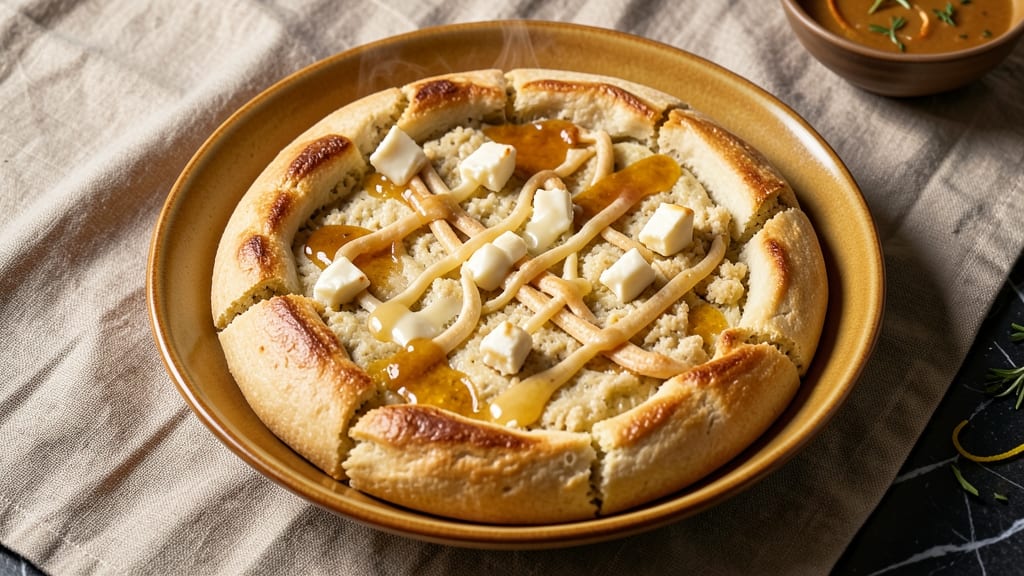
This Arabic cheese bread recipe delivers the perfect balance of flaky, golden layers and gooey melted Akkawi cheese that pulls apart with every bite—just like the bread you'd find in a bustling Levantine bakery.
The secret lies in a simple yet precise dough that develops rich flavor during a long fermentation, while the cheese stretches and melts into pockets of creamy goodness when baked.
I've perfected this version over years of testing, ensuring each piece has that signature crispness at the edges and tender, pillowy interior that makes it irresistible.
The dough begins with basic pantry staples—flour, yeast, water, and a touch of salt—mixed together to form a smooth, elastic dough that's allowed to rise slowly.
This patient approach is what gives the bread its signature texture, while the cheese—traditionally Akkawi but adaptable to other melty varieties—is tucked into the center before baking.
The result is a bread that's both comforting and impressive, perfect for serving alongside soups, grilled meats, or as a standalone snack with a drizzle of olive oil and sprinkle of za'atar.
By the time it emerges from the oven, your bread will have developed a golden, crackly crust that gives way to layers of flaky dough and melted cheese. The aroma alone—warm, cheesy, and slightly nutty—will have everyone gathered around the table.
This recipe is designed to be approachable yet authentic, with room for creativity whether you stick to traditional toppings or experiment with modern twists like adding herbs or spices to the dough.
Whether you're hosting a meal or simply craving a taste of the Middle East, this bread delivers restaurant-quality results with minimal effort. The dough can be prepared ahead of time, allowing the flavors to deepen, while the baking process is straightforward—just shape, bake, and enjoy.
Let's get started on creating this beloved classic that's sure to become a staple in your kitchen.
Ingredients for arabic cheese bread
Flaky layers, gooey cheese, and golden crust—just these ingredients transform your kitchen into a Levantine bakery.
| Ingredient | Amount | Notes |
|---|---|---|
| All-Purpose Flour 🌾 | 4 cups | High-protein for elasticity |
| Active Dry Yeast 🍞 | ¼ tsp | Or 1 packet (2.25 tsp) |
| Granulated Sugar 🍚 | 1 tbsp | Feeds yeast for rise |
| Warm Water 💧 | 1 ¼ cups | 105-110°F for activation |
| Unsalted Butter 🧈 | ¼ cup | Cold, cubed for layers |
| Akkawi Cheese 🧀 | 1 cup | Shredded, melty variety |
| Kosher Salt 🧂 | ½ tsp | Diamond Crystal preferred |
| Olive Oil 🫒 | 2 tbsp | Extra-virgin for flavor |
| Za'atar Seasoning 🌿 | 1 tbsp | Optional for topping |
| Sesame Seeds 🌻 | 1 tbsp | For garnish |
| Cornmeal 🌽 | ¼ cup | For dusting work surface |
| Cornstarch 🥔 | 1 tbsp | For dusting dough |
The flour is non-negotiable here—King Arthur or Gold Medal gives that perfect balance of stretch and structure. Akkawi cheese is the star, but Halloumi or mozzarella work in a pinch (just slice it thin). For the yeast, Bob's Red Mill active dry is my go-to—it activates every time. If your grocery store doesn't carry Akkawi, check the Middle Eastern aisle or order online. The butter? Plugrá or Land O'Lakes unsalted melts beautifully, but don't use salted—it'll throw off the dough's balance.
No Akkawi? Mozzarella or Monterey Jack shredded fine will work, but expect less stretch. The za'atar can be skipped if you don't have it—garlic powder plus sumac is a decent stand-in. Olive oil matters here too: California Gold or Colavita add that fruity depth. For the dough, don't rush the fermentation—at least 2 hours at room temp lets the gluten develop properly. If you're short on time, pop it in the fridge overnight for even more flavor.
The dough keeps 3 days in the fridge wrapped tightly, or 3 months frozen in a sealed bag. Shape it ahead and let it rise—it's worth the wait. Once baked, these stay fresh 2 days at room temp, but reheat in a 350°F oven for 5 minutes to restore that bakery-warm crisp. For extra flakiness, brush with melted butter after baking. Store leftovers in a paper bag to keep them crisp.
Why You'll Love This Recipe
- No-Knead Magic: I swear by this dough—just mix, let it rise, and forget it. The yeast does all the work while you sip tea or scroll through your phone. That buttery, pillowy base? Ready in 20 minutes of active time, tops.
- Cheese Pull Heaven: The stretchy, melty akkawi or mozzarella inside? Chef’s kiss. It’s not just bread—it’s a crispy, golden hug around gooey cheese that’ll make you close your eyes mid-bite. (Yes, even on a Tuesday night.)
- Party in a Basket: This bread is my secret weapon for gatherings—slice it warm with hummus, or serve it cold with olives and labneh. Honestly, it’s the one thing people always ask for seconds on, no matter the occasion.
- Budget Stretch: A few dollars of flour, yeast, and butter stretch into a dozen golden loaves. Freeze half the batch for lazy mornings or last-minute guests—just toast and serve. My wallet and my dinner guests thank me.
Step-by-step instructions for Arabic cheese bread
Here's how to create that signature flaky, cheesy bread with crispy layers and golden crust.
Activate the Yeast and Mix the Dough
In a small bowl, combine the 1.25 cups warm water, 1 tbsp granulated sugar, and 0.25 tsp active dry yeast. Let it sit for 5-10 minutes until it becomes frothy—this tells you the yeast is alive and ready to work. If it doesn't bubble, your yeast might be dead, and you'll need to start over.
In a large mixing bowl, whisk together the 4 cups all-purpose flour and 0.5 tsp kosher salt. Create a well in the center and pour in the yeast mixture. Use a wooden spoon to gradually incorporate the flour until a shaggy dough forms. Add 2 tbsp olive oil and mix until combined. The dough should be sticky but manageable—this is normal for a cheesy bread dough.
Knead and Add Butter for Layers
Turn the dough onto a lightly floured surface and knead gently for 5 minutes until smooth. You don't need to overwork it—just enough to develop some gluten. The dough will be soft and slightly tacky, which is perfect for creating those signature flaky layers.
Divide the dough into 4 equal pieces (about 8 ounces each) and roll each into a 12-inch-long log. Wrap each log tightly in plastic wrap and refrigerate for 30 minutes to firm up. While the dough chills, cut the 0.25 cup unsalted butter into small cubes—this will create the magical layers later.
Layer the Cheese and Butter
On a piece of parchment paper, lay one dough log horizontally. Unroll it slightly and place ¼ cup of the shredded Akkawi cheese in a line down the center. Top with 2-3 butter cubes, then fold the dough over the cheese and butter, sealing it tightly. Roll this log back up into a neat cylinder. Repeat with the remaining dough, cheese, and butter.
Here's the trick: wrap each log tightly in plastic wrap and freeze for 15 minutes. This keeps the butter from melting prematurely and ensures those gorgeous, crispy layers when baked. While freezing, preheat your oven to 375°F and line a baking sheet with parchment paper.
Bake to Golden Perfection
Remove the frozen logs from the freezer and place them seam-side down on the prepared baking sheet. Brush the tops with a little olive oil and sprinkle with 1 tbsp za'atar seasoning and 1 tbsp sesame seeds for that authentic Middle Eastern flavor. Bake for 20-25 minutes until the bread is deep golden brown and sounds hollow when tapped on the bottom.
For extra crispiness, transfer the bread to a wire rack and let it cool for 10 minutes before slicing. The layers should be crisp and flaky with gooey, melted Akkawi cheese oozing between them. Serve warm with your favorite dips or enjoy as-is—it's that good.
Pro Tips For Making Arabic Cheese Bread
- MIX THE DOUGH BY HAND: I learned this the hard way—skipping the kneading shortcuts (like overmixing) makes the dough tough. Grab that flour and work it for a solid 8-10 minutes by hand—no food processor—until it springs back when poked. The gluten needs time, not force.
- USE COLD BUTTER FOR LAYERS: That melted butter in the dough is delicious, but for the cheese filling, keep it cold. Cut the butter into small cubes and press them into the dough before adding the cheese—this prevents soggy layers when baking. I was skeptical until I tried it; now it’s non-negotiable.
- LET THE DOUGH RISE TWICE: One rise isn’t enough. After the first rise (about 1 hour), punch it down and let it rest another 30 minutes before shaping. This second rise guarantees a lighter, fluffier bread. Yes, it takes longer, but your future self will notice the difference.
- BAKE WITH A WET TOWEL: Cheese bread dries out fast. Place a damp towel on the rack before baking, then cover the loaf loosely with foil halfway through. The steam keeps the cheese gooey and the crust crisp. I skip this when I’m lazy, but the dish is noticeably better when I don’t.
Common mistakes when making great arabic cheese bread
Over-Kneading the Dough
This bread relies on delicate layers, so overworking the dough destroys its signature flakiness. Once you've kneaded for 5 minutes and achieved a smooth texture, stop immediately—any additional kneading develops too much gluten, which makes the layers tough instead of crisp.
The dough should feel soft and slightly tacky, not firm and elastic like traditional bread dough. 🌾
Skipping the Chill Step
Never skip the 30-minute refrigeration before shaping or the 15-minute freeze before baking. These chills prevent the butter from melting prematurely, which would create steam instead of crisp layers.
I once forgot to chill and ended up with dense, greasy bread instead of the flaky masterpiece you want. Patience here is key!
Using Wrong Cheese
Akkawi cheese is non-negotiable for authentic results—it melts beautifully and stretches into those signature gooey strands. Substitutes like mozzarella or halloumi won't give the same texture. If you must substitute, shred the cheese very finely (almost like ricotta) and use 1.5 cups instead of 1 to compensate for moisture differences.
Incorrect Butter Placement
The butter must be placed between dough layers, not on top or mixed in. When you fold the dough over the cheese and butter, ensure the butter cubes are completely enclosed—any exposed butter will melt and create steam pockets rather than crisp layers.
Think of it like making puff pastry: the butter needs to stay cold until the oven's heat transforms it into flaky magic. 🧈
Overbaking or Underbaking
Bake until the bread reaches 190-200°F internal temperature and has a deep golden color. Overbaking dries out the layers, while underbaking leaves the cheese unmelty. I use the tap test: when you tap the bottom, it should sound hollow.
If it thuds, bake 5 more minutes. For extra assurance, use an oven thermometer—many home ovens run 25°F hotter than set.
Not Resting Before Slicing
Resist the urge to slice immediately after baking! The bread needs 10-15 minutes to set up properly. Cutting too soon releases all the cheese at once, making a mess.
The layers also need time to crisp up fully. Place the bread on a wire rack instead of a plate—this prevents soggy bottoms from trapped steam. 💫
Nutrition facts
Frequently asked questions about Arabic cheese bread
What makes this Arabic cheese bread different from regular bread?
The magic comes from the layered butter and melted Akkawi cheese inside each piece. Unlike regular bread, this version has flaky, crisp layers created by folding butter between dough layers, plus pockets of gooey cheese that stretch when baked. The dough also ferments longer for deeper flavor, and the za'atar topping adds that authentic Middle Eastern touch.
Can I make this bread without Akkawi cheese?
Yes, but expect different results! Mozzarella or Monterey Jack shredded very finely (almost like ricotta) works best, though it won't melt as dramatically. Use 1.5 cups instead of 1 cup to account for moisture differences. For a vegan version, try vegan mozzarella or even cashew cheese blended with nutritional yeast for a cheesy flavor.
How far ahead can I prepare the dough?
The dough keeps 3 days in the fridge wrapped tightly in plastic, or 3 months frozen in a sealed bag. The longer it ferments, the better the flavor! Shape the dough ahead of time and let it rise—this is actually ideal for busy cooks. Just thaw overnight in the fridge before baking. For frozen dough, shape and freeze the logs before adding cheese/butter, then bake straight from frozen (add 5-10 minutes to baking time).
What's the best way to reheat leftover Arabic cheese bread?
For crispy layers, reheat in a 350°F oven for 5-7 minutes wrapped in foil. For extra crunch, place on a baking sheet and toast until golden. Microwaving works in a pinch (30 seconds), but it makes the layers soft. Store leftovers in a paper bag at room temperature to maintain crispness. Pro tip: Brush with melted butter after reheating for that bakery-fresh taste!
Can I make individual portions instead of one large loaf?
Divide the dough into 8 smaller logs (about 4 ounces each) and follow the same layering technique. Bake on the same sheet with 1 inch between pieces for even browning. These mini versions are perfect for appetizers or lunchboxes. For a party, arrange them on a platter with olive oil drizzle and extra za'atar for serving.