
Side Dishes
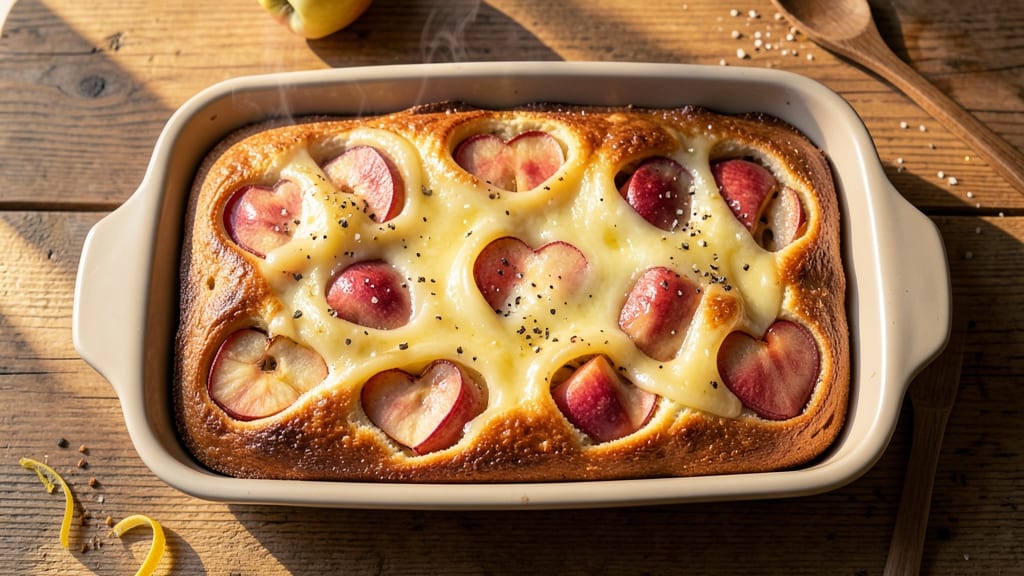
This apple cheese bread recipe combines the cozy warmth of homemade bread with the perfect balance of sweet apples and sharp cheddar. The secret lies in folding tender apple slices and melted cheese into a golden dough, creating a loaf that's as beautiful as it is delicious.
I've perfected this recipe over years of baking, ensuring every slice delivers that ideal mix of crispy crust and soft, chewy interior.
The dough starts with a simple yeast-based mix of flour, sugar, and milk, which comes together quickly in a stand mixer or by hand. What sets this recipe apart is the apple-cheese swirl—thinly sliced apples and shredded cheddar folded into the dough before baking.
The apples caramelize slightly while the cheese melts into creamy pockets, creating a flavor combination that's both comforting and unexpected.
Baking at 375°F for 25-30 minutes yields a loaf with a golden-brown crust and tender crumb, where every bite reveals layers of sweet apple and savory cheese. The aroma alone will fill your kitchen with warmth, making it perfect for breakfast, lunch, or a special treat.
This recipe is especially magical during apple season, but it works year-round with store-bought apples.
For extra indulgence, brush the warm loaf with a light honey glaze or dust it with powdered sugar. Serve it fresh from the oven, or save slices for toast the next morning.
The possibilities are endless—whether you're hosting a brunch or simply craving a comforting snack, this apple cheese bread delivers restaurant-quality results with minimal effort.
Ingredients for apple cheese bread
Simple pantry staples plus seasonal apples and sharp cheddar create this perfect loaf.
| Ingredient | Amount | Notes |
|---|---|---|
| Active Dry Yeast 🍞 | 2 ¼ tsp | One packet preferred |
| Warm Whole Milk 🥛 | 1 cup | 110°F for activation |
| Granulated Sugar 🍚 | ¼ cup | White or brown |
| Unsalted Butter 🧈 | ½ cup | Softened, not melted |
| All-Purpose Flour 🌾 | 3 ¾ cups | Spooning and leveling |
| Large Eggs 🥚 | 1 whole | Room temperature |
| Diamond Crystal Kosher Salt 🧂 | 1 ½ tsp | Adjust to taste |
| Sweet Apples 🍎 | 1 ½ cups | Thinly sliced, peeled |
| Sharp Cheddar Cheese 🧀 | 1 ½ cups | Shredded, block preferred |
| Granulated Sugar 🍚 | ¼ cup | For topping |
| Light Brown Sugar 🍚 | ¼ cup | Packed, for topping |
| Cinnamon 🌿 | 1 tsp | Ground, for topping |
The apples are everything here. Honeycrisp or Granny Smith work best—they hold shape while baking without turning mushy. Whole Foods or local markets usually have the freshest varieties. If you're using store-bought, look for apples that are firm to the touch and free of bruises. The cheese should be sharp cheddar—avoid pre-shredded (it gets gummy). I always buy a block and shred it myself for the best texture. For the flour, King Arthur or Gold Medal brands are my go-tos—they give that perfect chewy texture. The yeast? One packet is all you need, but make sure it's fresh—test it in warm milk with a pinch of sugar to confirm it's active before starting.
No sharp cheddar? Pepper Jack or Gouda work in a pinch, though the flavor will differ. Running out of apples? Pears or dried apricots add sweetness, but they'll caramelize differently. The butter must be softened—microwave 20 seconds if it's too firm, then let it sit for 2 minutes. For the topping, if you're short on brown sugar, white sugar plus a pinch of cinnamon gets you close. The cinnamon can be swapped for nutmeg or cardamom if you're feeling adventurous. Pre-shredded cheese? Toss it with 1 tsp cornstarch to absorb moisture and prevent gumminess.
This loaf reheats beautifully—10 minutes at 350°F restores that fresh-from-the-oven warmth. Wrap tightly in foil and store at room temperature for 2 days, or freeze for 3 months. I like to slice it while still warm and freeze individual portions for quick toast. The apples and cheese keep best in the fridge for 3 days before baking—just bring them to room temperature first. For extra crunch, sprinkle chopped pecans on top before baking. The dough can be made ahead and refrigerated overnight for even better flavor development.
Why You'll Love This Recipe
- No-Fuss Dough: I swear by this recipe because it’s more about mixing than fussing. Just toss in the yeast, warm milk, and a pinch of sugar—let it sit while you dice apples and melt butter. The dough comes together faster than I can finish a podcast episode.
- Sweet-Savory Magic: That caramelized apple filling paired with creamy cheese? It’s the kind of flavor combo that makes you question why you ever bought store-bought bread. The sugar in the dough balances the sharpness of the apples, and the butter makes every bite feel indulgent.
- Breakfast or Snack: Honestly, this bread works for everything. Toast it for breakfast with a smear of butter, pack slices for lunch, or serve warm with dinner. It’s my go-to for brunch with coffee or a quick after-school snack when the kids are hungry.
- Budget-Friendly Staple: Between us, this recipe costs next to nothing but delivers big. A packet of yeast, a few apples, and a block of cheese stretch into multiple loaves. Plus, it freezes like a dream—perfect for when you’ve got a busy week ahead.
Step-by-step instructions for apple cheese bread
Here's how to create a tender loaf with sweet apple-cheddar swirls that bake up perfectly every time.
Activate the Yeast and Mix the Dough
In a large bowl, combine the 1 cup warm whole milk (about 110°F) with the 2.25 teaspoons active dry yeast and ¼ cup granulated sugar. Let it sit for 5-10 minutes until frothy—this confirms your yeast is active. If it doesn't bubble, start over with fresh yeast.
Once frothy, add the ½ cup softened unsalted butter, 1 whole large egg, and 1½ teaspoons diamond crystal kosher salt. Mix until combined, then gradually add the 3¾ cups all-purpose flour, stirring just until the dough comes together. Avoid overmixing—you want a slightly sticky but manageable dough.
Knead and Incorporate the Apple-Cheddar Filling
Turn the dough onto a lightly floured surface and knead for 5-7 minutes until smooth and elastic. Shape into a rectangle about 12x8 inches. In a separate bowl, mix the 1½ cups thinly sliced sweet apples and 1½ cups shredded sharp cheddar cheese—this is your filling.
Spread the apple-cheddar mixture evenly over the dough, leaving a ½-inch border around the edges. Roll the dough tightly into a log, pinching the seam to seal. Place the loaf seam-side down in a greased 9x5-inch loaf pan.
First Rise and Prepare the Topping
Cover the loaf with a clean kitchen towel and let it rise in a warm place for 1-1½ hours, or until it has nearly doubled in size. While it rises, prepare the topping by mixing ¼ cup granulated sugar, ¼ cup packed light brown sugar, and 1 teaspoon cinnamon in a small bowl.
This topping will create a caramelized crust that balances the sweetness and savory flavors. Sprinkle it evenly over the risen dough, pressing lightly so it adheres. The dough should be puffy but still soft to the touch—if it springs back slowly when poked, it's ready for baking.
Bake to Golden Perfection
Preheat your oven to 375°F. Bake the loaf for 45-50 minutes, until the top is deep golden brown and an instant-read thermometer inserted into the center reads 190-200°F. The internal temperature is more reliable than appearance—sometimes the crust browns before the bread is fully baked.
If the top browns too quickly, tent the loaf with aluminum foil. For the best texture, let it cool in the pan for 10 minutes before transferring to a wire rack. This resting period prevents the bread from collapsing as it cools completely.
Slice and Serve Warm
Once cooled for 15-20 minutes, slice the loaf into 4 equal portions (about 1-inch thick slices). The interior should be tender with pockets of melted cheddar and caramelized apples. Serve warm with a pat of butter or a drizzle of honey for extra richness.
This bread keeps well at room temperature for 2 days or can be frozen for up to 3 months. The flavors deepen as it sits, making it even more satisfying the next day. Store any leftovers wrapped tightly in plastic wrap to maintain freshness.
Pro Tips For Making Apple Cheese Bread
- Use a thermometer for milk: I learned this the hard way—yeast is fussy about temperature. Warm whole milk should hit 105–110°F (40–43°C), not just "hand-hot." Cold milk kills the yeast; too hot, and it cooks it. A cheap instant-read thermometer solves this faster than guessing.
- Cut butter into tiny cubes: Cold, pea-sized chunks of unsalted butter melt evenly into the dough, creating pockets for that rich, buttery flavor. I used to toss in a big slab, and it’d clump—now the bread has perfect layers instead of greasy spots.
- Don’t overmix the dough: After adding the yeast and milk, mix just until the flour is mostly incorporated. Overworking it develops gluten too early, making the bread dense. Stop when it looks shaggy—knead later if needed.
- Proof the dough in a warm spot: A turned-off oven with a bowl of boiling water underneath keeps the dough cozy at 75–80°F (24–27°C). My first loaves took forever in a cold kitchen—this cuts proofing time by half while guaranteeing a light, airy crumb. (Yes, even if you’re impatient like me.)
Troubleshooting this dish
Dough Too Sticky
If your dough feels overly sticky after kneading, you likely need more flour—but don’t overdo it. Gradually add 1 tablespoon at a time while kneading until it’s just manageable.
I’ve found that King Arthur flour absorbs moisture better than some store brands, so if you’re using a different flour, adjust accordingly. For extra insurance, chill the dough for 15-20 minutes before shaping to firm it up. 💡
Yeast Not Activating
If your yeast mixture doesn’t bubble after 10 minutes, your yeast is likely dead or the milk was too hot.
Test with fresh yeast—just 1 packet of active dry yeast should create a foamy, bubbly reaction in 5-10 minutes when mixed with warm (110°F) milk and a pinch of sugar. If it’s still inactive, try a different packet or check your milk temperature with a thermometer. 🌡️
Apples Turning Mushy
Overly soft apples can make your bread soggy. To prevent this, toss sliced apples with 1 teaspoon lemon juice before mixing into the dough—this preserves their texture. Also, avoid using overly ripe apples like Fuji; stick to firmer varieties like Honeycrisp or Granny Smith.
If your apples are still too soft, pat them dry with a paper towel before adding them to the dough. 🍎
Cheese Not Melting
If your cheese stays in chunks instead of melting into creamy pockets, it might not be sharp enough or the oven temperature may be too low. Use sharp cheddar (or Pepper Jack for extra meltiness) and ensure your oven is fully preheated to 375°F.
For extra insurance, place the loaf on the middle rack—this ensures even heat distribution. If your oven runs hot, tent the loaf with foil after 20 minutes to prevent over-browning. 🧀
Bread Collapsing
A collapsed loaf usually means the yeast didn’t have enough time to rise or the dough was overworked. Let the dough rise until it’s nearly doubled in size (about 1-1½ hours) and avoid over-kneading—just until smooth.
If your kitchen is cold, place the dough in a warm spot (like a turned-off oven with the light on) to speed up rising. Also, don’t skip the 10-minute rest in the pan after baking—this helps the structure set before cooling. 🏗️
Uneven Baking
If one side of your loaf is underbaked or over-browned, rotate the pan halfway through baking. For even browning, brush the top with a little milk or water before adding the sugar topping—this creates a slight barrier against over-browning.
If your oven has hot spots, use an oven thermometer to confirm it’s at 375°F and adjust your rack position if needed. A 9x5-inch loaf pan should bake evenly, but if yours is oddly shaped, check for air gaps around the edges. ⚖️
Nutrition facts
Frequently asked questions
Can I make this apple cheese bread without yeast?
Yes! For a quick version, replace the yeast with 1 teaspoon baking powder and 1 teaspoon baking soda in the dough. Skip the rising time and bake immediately at 375°F for 35-40 minutes. The texture will be denser but still delicious. This works well if you're short on time or want a faster option.
What's the best way to store leftover apple cheese bread?
Wrap the cooled loaf tightly in plastic wrap or aluminum foil to keep it fresh for 2-3 days at room temperature. For longer storage, slice it and freeze individual portions for up to 3 months. To reheat, warm slices in a 350°F oven for 10 minutes or toast in a toaster until golden. The flavors actually improve slightly after the first day!
How do I adjust this recipe for a pull-apart version?
For a pull-apart style, divide the dough into 4 equal portions and shape each into a ball. Place them in a greased 9x13-inch baking dish, then press the apple-cheese filling into the center of each ball. Let rise, then bake at 375°F for 20-25 minutes until golden. This creates individual bread rolls with gooey centers. Perfect for brunch!
Can I substitute applesauce for fresh apples?
You can use unsweetened applesauce, but the texture will be different. Replace 1½ cups sliced apples with 1 cup applesauce and reduce the sugar in the topping by 2 tablespoons. The bread will be moister but still flavorful. For best results, pair with extra cheese to balance the texture. This works well if you're short on fresh apples.
Why does my apple cheese bread taste bland?
Bland flavor usually comes from weak cheese or overripe apples. Use sharp cheddar (not mild) and firm apples like Honeycrisp or Granny Smith. For extra depth, add ½ teaspoon cinnamon to the dough or a pinch of nutmeg to the topping. Also check your salt—1½ teaspoons is just right for this recipe. Taste as you go!