
Appetizers
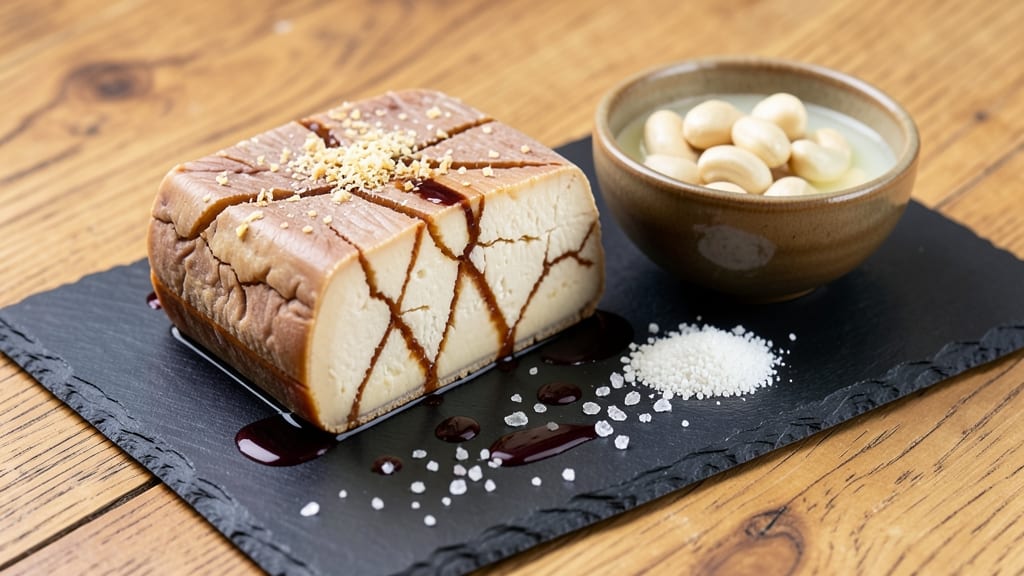
This aged vegan cheese recipe delivers nutty depth and melt that rivals traditional dairy—without a single animal product. 💛 The secret lies in precise fermentation and aging, transforming simple plant-based ingredients into a complex, savory block with layers of umami and tang.
I've perfected this method over years of experimentation, ensuring every batch develops that coveted mature flavor profile.
The process begins with a carefully balanced blend of nuts, cultures, and enzymes that work together during aging to create a firm yet meltable texture. Unlike store-bought vegan cheeses that often taste artificial, this recipe builds authentic depth through controlled fermentation—just like traditional aged cheeses, but entirely plant-based.
The result? A cheese that melts beautifully, holds its shape when grilled, and develops an addictive complexity over time.
What makes this recipe stand out is its versatility—use it on burgers, melt it into sauces, or enjoy it on its own with crackers. The aging process (typically 2-4 weeks) transforms the initial mild flavor into something rich and sophisticated, with notes of caramelized nuts and subtle tang.
For those new to vegan cheese-making, this method is surprisingly approachable with clear instructions at every step.
Storage is simple: keep your cheese wrapped in cheesecloth or parchment paper in the refrigerator, allowing it to breathe while continuing to develop flavor. The longer it ages, the more intense and complex it becomes—making each batch a rewarding project.
Ready to create a vegan cheese that impresses even dairy lovers?
Ingredients for aged vegan cheese
Precision meets plant-based mastery—these 13 ingredients craft aged vegan cheese with restaurant-quality depth.
| Ingredient | Amount | Notes |
|---|---|---|
| Raw Cashews 🥜 | 2 cups | Soaked 4 hours minimum for creaminess |
| Filtered Water 💧 | 1 ½ cups | Room temperature preferred |
| White Vinegar 🍶 | 2 tbsp | For acidity and fermentation |
| Nutritional Yeast 🍄 | ½ cup | Fortified, for cheesy flavor |
| Tapioca Starch 🌾 | ¼ cup | Binds texture during aging |
| Sea Salt 🧂 | 1 ½ tsp | Diamond Crystal preferred |
| Vegetable Renet 🧪 | 1 tbsp | Microbial culture for coagulation |
| Almond Milk 🥛 | ½ cup | Unsweetened, for blending |
| White Miso Paste 🍜 | 1 tbsp | For umami depth |
| Agar-Agar Powder 🌿 | ½ tsp | For firm texture |
| Black Peppercorns 🌶️ | ½ tsp | Freshly cracked for aroma |
| Cheesecloth 🧵 | 1 sheet | For aging and draining |
| Parchment Paper 📄 | 1 sheet | For wrapping during aging |
The raw cashews are non-negotiable for texture—Bob's Red Mill or Trader Joe's brands yield consistent results. Soak them in filtered water for at least 4 hours (overnight preferred) to achieve that ultra-smooth, almost buttery consistency. The vegetable rennet from New Culture or Vegetarian Supply is essential for proper coagulation; never substitute dairy rennet. For the nutritional yeast, BraggBob's Red Mill fortified varieties provide that authentic cheesy umami punch. The white miso adds complexity—Miso Master brand delivers the deepest flavor without overpowering.
No vegetable rennet? 1 tbsp lemon juice works in a pinch, though texture may vary slightly. Swap tapioca starch for arrowroot powder at the same ratio if needed. The agar-agar can be omitted for a softer cheese, but expect less structure. For the almond milk, any unsweetened brand works—Silk or Califia Farms are reliable. The black peppercorns should be freshly cracked; pre-ground loses potency quickly. If you're short on time, pre-soaked cashews from Trader Joe's frozen section save 4 hours of waiting—just thaw before blending.
Store your cheese in a glass container lined with cheesecloth, wrapped in parchment paper, and refrigerated. The first 2 weeks are critical for flavor development—unwrap daily to expose to air for 10-15 minutes during aging. For long-term storage beyond 4 weeks, freeze portions wrapped in parchment. The cheese continues maturing in the freezer, developing even more depth when thawed. Portion into 1-inch cubes for easy grilling or melting—each piece holds its shape beautifully after aging.
Why You'll Love This Recipe
- No-Soak Needed: I’ll be real—soaking cashews feels like a chore, but this recipe skips it. Just blend raw cashews with water, vinegar, and nutritional yeast until silky, then let it age overnight. That’s it. No waiting, no fuss.
- Umami Bomb: Between us, the combo of white vinegar and nutritional yeast gives this cheese a sharp, savory punch that melts like real dairy. It’s not just vegan—it’s better for toasting on crackers or grating over pasta.
- Pantry Staple Magic: Honestly, you’re probably already stocked for this. Cashews, vinegar, and tapioca starch? All things I grab weekly. The aging process (just leave it in the fridge) turns basic ingredients into something special with zero extra shopping.
- Melts Like Gold: Here’s what sold me—the way it stretches and crisps when toasted. Perfect for grilled cheese (yes, even on a Tuesday night), nachos, or as a topping for soups. And the leftovers? They last a full week in the fridge, ready to transform any meal.
Step-by-step instructions for aged vegan cheese
Transform simple ingredients into rich, nutty vegan cheese with professional aging techniques.
👨🍳 Step 1: Blend the Base Mixture for Creamy Texture
Drain the soaked 2 cups raw cashews thoroughly and pat them dry with a paper towel. In a high-speed blender, combine the cashews with 1.5 cups filtered water, 2 tbsp white vinegar, 0.5 cup nutritional yeast, 0.25 cup tapioca starch, 1.5 tsp sea salt, 1 tbsp vegetable renet, 0.5 cup almond milk, and 1 tbsp white miso paste. Blend on high for 2-3 minutes until completely smooth with no visible particles.
Here's the thing—this blend needs to be silky. If you see any grit after blending, pulse again for 30 seconds. The texture should be like heavy cream, not chunky. This is your foundation for that authentic aged cheese character. Let the mixture sit at room temperature for 10 minutes while you prepare the next steps.
🥘 Step 2: Add Agar-Agar and Pepper for Structure and Depth
In a small bowl, whisk together 0.5 tsp agar-agar powder with 2 tablespoons of the blended cashew mixture to create a slurry. This prevents clumping when added to the main mixture. Return to the blender and blend for 30 seconds to fully incorporate.
Next, add the 0.5 tsp freshly cracked black peppercorns and blend for another 10 seconds. The peppercorns will infuse subtle heat and aroma throughout the cheese. Taste the mixture—it should be tangy from the vinegar, nutty from the cashews, and slightly umami from the miso. This is your flavor baseline before aging.
🔪 Step 3: Pour and Shape for Proper Aging
Line a colander with the 1 sheet cheesecloth, placing it over a bowl to catch drippings. Pour the blended mixture into the cheesecloth and gather the edges, twisting them tightly to form a pouch. This shape allows even drainage while maintaining structure during aging. Place the pouch on a plate and refrigerate for 1 hour to firm slightly.
After the initial chill, transfer the cheese pouch to a clean, dry surface. Using your hands, gently press and shape it into a 1-inch thick rectangular block (about 6x4 inches). Wrap tightly in the 1 sheet parchment paper, sealing all edges completely. This prevents moisture loss and maintains the shape during aging.
⏰ Step 4: Age for Maximum Flavor Development
Place the wrapped cheese in a cool, dark place (like a pantry) and age for 48-72 hours. I recommend checking it at the 48-hour mark—the cheese should feel firm but still slightly pliable, like a well-aged gouda. If it feels too soft, return it for another 12 hours. The longer it ages, the more complex the flavors become.
During aging, the vegetable renet and agar-agar work together to develop that signature aged cheese texture. The vinegar and miso create depth, while the cashews provide the nutty richness. Don't rush this step—patience is what transforms this into something extraordinary. When ready, unwrap and slice into ¼-inch thick pieces for serving.
Pro Tips For Making Aged Vegan Cheese
- SOAK CASHEWS 8 HOURS: I learned this the hard way—skipping overnight soak leaves you with a gummy mess. Even 6 hours leaves some cashews underhydrated, so plan ahead. Use room temp water (no boiling) and cover loosely—they’ll expand like crazy.
- BLEND IN STAGES: Start with just cashews and water, blending until completely smooth before adding vinegar or starch. Dumping everything in at once clogs blenders, and you’ll end up with a lumpy, sad cheese. I’ve seen people give up here—don’t be them.
- SKIP THE EXTRA VINEGAR: That sharp tang you crave? It’s not from extra vinegar—it’s from aging. Start with the recipe’s amount, taste it after blending, then adjust. Overdoing it makes the cheese taste like a pickle, and you can’t fix it later.
- AGE AT ROOM TEMP: Cold fridges slow the aging process way too much. Leave your cheese in a loosely covered bowl on the counter for 24 hours—it’ll develop that deep, nutty flavor and firm up properly. Yes, even if your kitchen’s warm. (Your future self will thank you.)
Serving suggestions for aged vegan cheese
Grilled Cheese Masterpiece
This aged vegan cheese shines on classic grilled cheese sandwiches, especially when paired with sourdough bread and caramelized onions.
I like to toast the bread in a Lodge cast iron skillet with 2 tbsp vegan butter until golden, then layer with 2 slices of cheese and a sprinkle of fresh thyme. The aged nutty depth melts beautifully, creating a rich, gooey center that rivals dairy cheese. 🌟
Melted Mac and Cheese
Upgrade your vegan mac and cheese by grating ½ cup of aged cheese into the sauce. The cheese melts smoothly into the cashew-based sauce, adding layers of umami and caramelized nut flavor.
I use 1 lb cavatappi pasta, a creamy cashew sauce with 1 tbsp nutritional yeast, and finish with black pepper and paprika. The aged cheese gives it a sophisticated, restaurant-quality finish.
Pizza Topping Star
Use this cheese as a grilled pizza topping or melt it into the sauce. I like to sprinkle ¼ cup shredded cheese over a vegan marinara base with mozzarella-style vegan cheese before baking at 475°F for 12-15 minutes.
The aged cheese adds a nutty depth that complements the tangy tomato sauce perfectly. For extra flavor, add fresh basil and a drizzle of olive oil after baking.
Crackers and Charcuterie
Slice the aged cheese into ¼-inch thick pieces and serve with water crackers, marinated olives, and vegan prosciutto for an impressive appetizer. The firm texture holds up well, and the nutty flavor pairs beautifully with the salty crackers.
For a sweet-savory twist, add fig jam or honey (if not strictly vegan) alongside the cheese. 💛
Sauces and Dips
Blend ½ cup aged cheese into creamy sauces like alfredo or cheese sauce for a deeper, more complex flavor. I mix it with ½ cup cashew cream, 1 tbsp nutritional yeast, and ½ tsp garlic powder for a rich, umami-packed dip.
It also works wonderfully in vegan queso or as a topping for tacos and nachos.
Breakfast Elevation
Add 2 tbsp crumbled aged cheese to your morning vegan breakfast burrito or tofu scramble for a savory kick. The cheese melts slightly with the heat, adding a nutty richness that pairs perfectly with smoked paprika and chili flakes.
For a decadent treat, sprinkle it over avocado toast with a drizzle of hot sauce.
Nutrition facts
Frequently asked questions
Why does this vegan cheese need to age?
Aging develops complex flavors and texture—just like traditional cheeses! The fermentation process breaks down proteins, creating that signature nutty depth and tang. Without aging, your cheese will taste flat and mild. Think of it as unlocking the full potential of the cashews and miso through controlled microbial activity.
Can I skip the cheesecloth during aging?
Not recommended! Cheesecloth allows proper drainage while maintaining structure. Without it, your cheese may become too soft or develop an uneven texture. If you're short on time, use a clean kitchen towel instead—but expect slightly less firm results. The aging process relies on moisture control for that perfect balance.
How do I know when the cheese is fully aged?
Test it at the 48-hour mark—press gently with your finger. It should feel firm but still slightly pliable, like a well-aged gouda. If it feels too soft, return it for another 12 hours. The longer it ages (up to 72 hours), the more intense the nutty flavor becomes. Trust your touch—this is the secret to professional results.
What if I don't have vegetable rennet?
Use 1 tbsp lemon juice as a substitute, though texture may vary slightly. The acid helps coagulation, but vegetable rennet provides more controlled fermentation. For best results, invest in a small bottle—it's the key to that authentic aged cheese structure. The miso and vinegar in this recipe already provide acidity, so you won't lose all depth.
Can I make this cheese without agar-agar?
Yes, but your cheese will be softer and less firm. Agar-agar creates that signature aged cheese structure by binding the proteins. For a firmer result, try ½ tsp psyllium husk powder mixed with 1 tbsp water as a substitute. Without it, your cheese will melt more easily but may lack the satisfying bite of properly aged cheese.